How VR and AR Are Revolutionizing the Gaming Industry
Virtual Reality (VR) and Augmented Reality (AR) are no longer futuristic concepts confined to science fiction movies. These immersive technologies are transforming the gaming industry by creating interactive, realistic, and deeply engaging experiences. As hardware becomes more accessible and developers push creative boundaries, VR and AR are reshaping how players interact with digital worlds.
In this article, we explore how VR and AR are revolutionizing gaming, the benefits they offer, current trends, and what the future holds for immersive gaming technologies.
Understanding VR and AR in Gaming
Before diving into their impact, it is important to understand the difference between VR and AR.
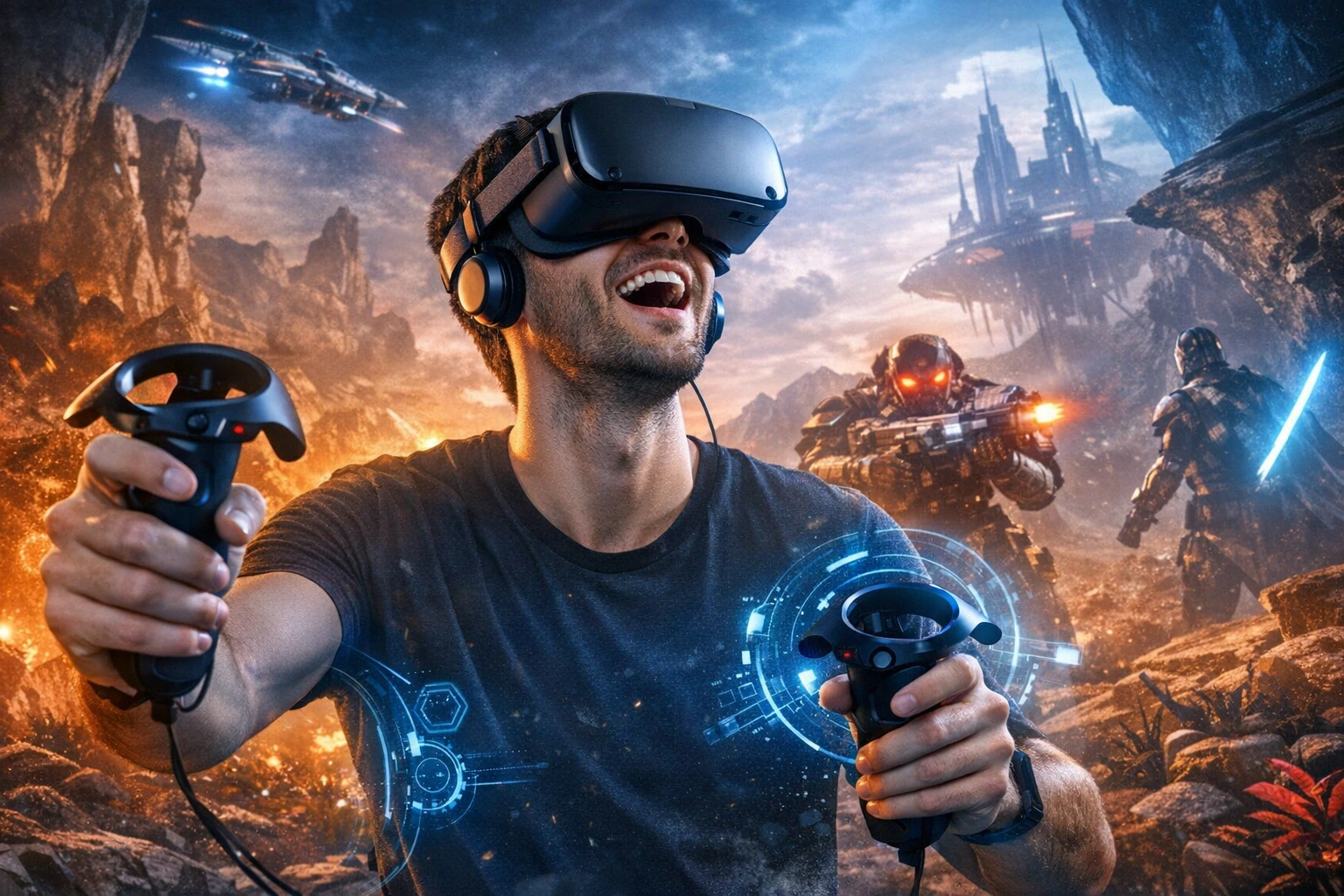
Virtual Reality (VR) immerses players in a fully digital environment using headsets, motion controllers, and tracking sensors. The real world is blocked out, allowing gamers to feel like they are inside the game.
Augmented Reality (AR) overlays digital elements onto the real world through smartphones, tablets, or smart glasses. Instead of replacing reality, AR enhances it with interactive virtual objects.
Both technologies aim to deliver immersive gameplay, but they do so in different ways.
The Rise of Immersive Gaming Experiences
One of the biggest ways VR and AR are transforming gaming is through immersive experiences. Traditional gaming relies on screens, controllers, and keyboards, which can limit player interaction. VR and AR break these boundaries by allowing players to move, interact, and explore naturally.
With VR headsets like Meta Quest, PlayStation VR, and HTC Vive, players can physically turn their heads, walk in virtual environments, and use hand gestures to interact with objects. This level of immersion creates a stronger emotional connection and enhances gameplay realism.
AR games like Pokémon GO have shown how digital elements can blend seamlessly into the real world, encouraging players to explore their surroundings while gaming.
Enhanced Realism and Interactivity
VR and AR introduce a new level of realism that traditional gaming cannot replicate. Advanced motion tracking, spatial audio, and haptic feedback allow players to feel present in the game world.
In VR, players can:
- Use realistic hand movements to grab objects
- Aim weapons naturally
- Explore 3D environments with full depth perception
AR adds interactive elements to the physical world, enabling players to:
- See virtual characters in real locations
- Interact with digital objects on real surfaces
- Participate in location-based gameplay
This realism makes gaming more engaging, interactive, and memorable.
Revolutionizing Game Development and Design
VR and AR are also changing how games are developed and designed. Developers must rethink game mechanics, storytelling, and user interfaces to suit immersive environments.
New Gameplay Mechanics
Traditional games rely on buttons and joysticks. VR and AR require intuitive gestures, motion tracking, and spatial interactions. This has led to innovative gameplay concepts such as room-scale exploration, gesture-based controls, and mixed-reality puzzles.
Immersive Storytelling
VR allows players to experience stories from a first-person perspective. Instead of watching cutscenes, players become part of the narrative. Developers can create emotional storytelling experiences by placing players directly inside the story world.
Social and Multiplayer Experiences
VR and AR enable social gaming in virtual spaces. Players can meet, communicate, and interact with others in shared virtual environments. Virtual worlds, avatars, and virtual hangouts are redefining online multiplayer gaming.
Expanding the Gaming Market
VR and AR are expanding the gaming industry beyond traditional gamers. Casual players, fitness enthusiasts, educators, and businesses are adopting immersive technologies for entertainment and training.
Fitness and Active Gaming
VR fitness games like rhythm-based workouts and sports simulations are attracting users who want fun exercise alternatives. These games turn workouts into interactive experiences.
Educational and Simulation Games
AR and VR are used in educational gaming, allowing players to learn history, science, and engineering through interactive simulations. Gamified learning experiences are becoming more engaging and effective.
Esports and Competitive Gaming
While VR esports is still developing, immersive competitive gaming is gaining traction. Virtual tournaments and VR multiplayer competitions are emerging as new entertainment formats.
Hardware and Technology Advancements
The rapid advancement of hardware is driving the growth of VR and AR gaming. Modern headsets are lighter, more powerful, and affordable compared to early models.
Improved Headsets
New VR devices offer higher resolution displays, better refresh rates, and advanced tracking systems. This reduces motion sickness and enhances visual realism.
Standalone VR Devices
Standalone headsets eliminate the need for expensive gaming PCs or consoles, making VR more accessible to mainstream users.
AR Smart Glasses
AR smart glasses are evolving rapidly, offering hands-free interaction with digital content. As these devices improve, AR gaming could become a daily entertainment platform.
Challenges and Limitations
Despite their potential, VR and AR gaming still face challenges.
High Costs
Although prices are decreasing, VR and AR hardware can still be expensive for many gamers.
Motion Sickness and Comfort
Some users experience discomfort or motion sickness in VR environments. Developers are working on solutions such as higher frame rates and improved locomotion techniques.
Limited Content
While the VR and AR game library is growing, it is still smaller compared to traditional gaming platforms. More high-quality content is needed to drive mass adoption.
Technical Requirements
VR gaming often requires powerful hardware and space for movement, which can be a barrier for some users.
Current Trends in VR and AR Gaming
Several trends are shaping the future of immersive gaming.
Metaverse and Virtual Worlds
VR is playing a major role in the development of the metaverse, where players can socialize, work, and play in persistent virtual environments.
Mixed Reality Gaming
Mixed reality combines VR and AR, allowing players to interact with both physical and virtual elements simultaneously. This opens new possibilities for hybrid gaming experiences.
AI Integration
Artificial intelligence is being integrated into VR and AR games to create smarter NPCs, adaptive environments, and personalized gameplay experiences.
Cloud and Streaming VR
Cloud gaming technology is enabling VR experiences without high-end hardware. Streaming immersive games could make VR accessible to millions of users worldwide.
The Future of VR and AR in Gaming
The future of gaming will be deeply influenced by VR and AR technologies. As hardware becomes more affordable and content libraries expand, immersive gaming will become mainstream.
Experts predict that VR and AR will:
- Transform gaming into fully immersive experiences
- Blur the line between digital and physical worlds
- Create new gaming genres and platforms
- Enhance social interaction and collaboration
- Integrate with AI, blockchain, and cloud computing
In the coming years, gamers may experience fully realistic virtual worlds, persistent digital environments, and real-world augmented gameplay integrated into daily life.
Why VR and AR Matter for Gamers and Developers
For gamers, VR and AR offer unprecedented immersion, realism, and interactivity. These technologies redefine how games are played and experienced.
For developers, VR and AR open new creative possibilities, business models, and revenue streams. Early adopters have the opportunity to shape the future of gaming and build innovative experiences that were impossible before.
About the Author